All Activity
- Past hour
-

Where to post a collective exercise?
Rose Lalonde replied to Marina's topic in Technical Forum Assistance
@JoyousGirl, if you decide to revive it there are no set rules except forum-wide rules, so you can pick when and how often to have it and what the sign up post looks like. All existing exchange circles include what the circle is for, the dates for sign up, reading, and feedback deadlines, and any rules you want to add to keep it running smoothly. You can edit those rules later too. @Marina, I misunderstood. Yeah, Daniel and Joy will know where exercises that allow both card and non-card divination together should go. 🙂 - Today
-

Different meanings across systems - do you get confused ?
Moon-Hermit replied to Celine's topic in Playing Cards
You’re right. The main images do trump the insets; you could consider them “lower hierarchy”, because you’re looking mainly at the images when doing a reading rather than the insets. But they aren’t separate parts. The Eight of Spades is there, for instance, because in the Lenormand deck it means what the Garden is: a literal garden (Spades are called Leaves in the german suit), a public place, outside, society, etc. Numerological-ly speaking, if you take number 8 as a group (which then extends to meanings like thoughts, ideas, balance, etc.) and put it next to Leaves, it’ll make sense: it’s a group you actually like being with; Andy explains this suit in his book as referring to people your age and of one’s social standing, plus love life (unlike English cartomancy where romance is attributed to Hearts; the Heart suit in Lenormand is more like domesticity and non-romantic feelings- you can see that with the King and Queen of Hearts on the cards of House and Storks, respectively, meaning domestic matters and changes relating to those matters). Normally in English cartomancy 8 Spades would be seen as toxicity, negativity, dark thoughts, a funeral, etc. In German cartomancy those meanings would relate to the 8 of Clubs more directly; Mountain (8 C) is something heavy on you, an obstacle/blockade, while Cross (6 C) is grief, etc. So, the insets look inferior at first glance but you’re actually interpreting them when reading a spread, if all of that makes sense 😀. Again, Lenormand is one variation of a playing-card based deck with illustrations, because the insets were interpreted as what those illustrations suggested or purely because the images derived from fables and moral stories that everyone could relate to back then. I’ve tried applying non-German meanings to the insets using a number of different systems, and there were examples where they worked. But it’s not standard practice. You have to know the tradition to fully grasp the cards, but then if you’re an open minded person you can experiment after that. (As long as you don’t change what Lenormand is altogether. I now use nothing but the German meanings). Personally, I prefer the ones that include the insets. You can actually do quite a lot of things with them; for example: 1- Determining Gender: I learned this from Rana George’s book. In my own practice, if I’m required to know a baby’s gender, I focus on the Child card and either a) shuffle and then search for the card through the deck to see which cards flank it on either side and if there are any court insets on them, or if a gender can be determined from the meanings of the cards (for example Tower is male because of the phallic shape, Moon is female because of popular association, etc.) This method I rarely use; b) I just pull the child card out of the deck, focus on it, and pull one card until I get one with a court inset. The first one that comes through would be the baby’s gender. Rana categorizes the Jacks as male, Queens as female, and Kings as male, but because I’d like to have an even chance of getting either gender, I only use the kings and queens. Jacks can be either male or female in my opinion. This can work also for finding out an anonymous person’s gender: for example, you’re thinking of searching for a roommate and wonder if they’ll be the same gender as yourself or not; or the gender of the next president, I don’t know lol. Silly examples, but you know what I mean. 2- Extra significators!= Another benefit of having court insets is that they enable you to identify people in your spreads, other than the preset Man and Woman cards. For example, the Queen of Spades is a young, beautiful and pleasant woman (so unlike her English equivalent!), and the King of Spades is an older man, a patron, or in some cases a lover, the Child card can sometimes stand as a rival in love, etc. Another use for them that I picked up on my own is that when I’m doing a smaller reading, say, a 3*3 box spread and the seeker’s significator doesn’t show up among the cards, I choose a court significator based on their coloring (hair, skin, eye color) and find the cards flanking it on either side. Then I read their general position but with influence “outside of the spread”, meaning that they don’t have direct power in this situation. If I decide to do this, I only see the chosen card as the one representing the significator and ignore the meaning (for instance if somebody is represented by the King of Clubs, aka the Clouds, you don’t panic. It’s just the person being read). Of course you can do the same with the Gentleman and Lady cards, and assign the insets to people other than the querent and THEIR influence on the situation from an indirect stance. 3- Multiples= more useful in larger spreads where you need to define a theme. 4- Determining the general mood of the spread (usually smaller ones) using the suits= More clubs are bad; Spades and Hearts are good, but you wouldn’t want to see the Diamonds with the Clubs as that would mean recklessness. Caitlin Matthews teaches this in detail in her book. 5- Timing= You can use the insets to determine seasons, the approximate week in which something may happen, etc. I learned this one from Andy. 6- Answering yes/no questions= Some people consider the pips when answering those. 7- The Master Method= Used instead of the usual meanings of the houses, for those readers that choose to use houses in their readings. Each house signifies a main theme; you focus on one according to your question and note the inset that falls there, not the actual card. Then you check in a book (like Foli’s or Jonathan Dee’s on playing cards) and read what that inset means in that house, and derive an answer from it. You can read multiple houses, and string whatever they mean together to arrive at a synthesis. That said, I rarely see people actually using this method with Lenormand. It tends to exhaust the reading. 8- To derive a geomancy figure= ❗️Not standard practice. Since I had studied the Playing Card Oracles by Ana Cortez too, I experimented with the technique and tried incorporating it into my 3*3 box spreads most of the time. This is done by stacking the four corner cards atop each other in the order you prefer (just make sure to stick to it) and derive a figure from those cards by doing the usual calculations. This will give you three figures to look at, one derived from number, the other from the color of the dominating card (the one on top of the stack), and the last from the combination of these two. You’ll read the three as advice, conclusion, clarification, or whatever you decide on beforehand. They match the theme of the reading and show you nuances. Nowadays I use it mostly for those questions that really require more complicated answers; otherwise geomancy is something I cast separately and read on its own. And the list goes on. I’m sure people can get creative. My point is that it’s better to have the insets there rather than exclude them altogether, but of course you won’t be using them in everyday, practical readings. Hope that could help. -
Different meanings across systems - do you get confused ?
Marina replied to Celine's topic in Playing Cards
In terms of cartomancy (with playing cards), I believe in picking one method and sticking to it. I use the Playing Card Oracles and only that. I don't mix it with, say, Hedgewytchery or Personal Prophesy, which are the two other methods I studied a bit more before choosing my favourite. Lenormand is a bit more tricky, but I always had the impression the actual image of the cards kind of trumps the insets? It's not that the inset playing cards have no importance, but they are 'lower hierarchy' compared to the main image/meaning of the cards. Or am I wrong here? I never really used Lenormand a lot, and the few times I did I used a deck without the playing cards, precisely to avoid the confusion in my mind. So I defer to those who have more experience with it! -
What a journey, @codygoodman1337! Glad you are in a better place now and that you found your way back to this community! Welcome!
-
Thank you for all the suggestions! The thing is that I would like to invite both card-centred and non-card divination methods, and that’s why I was unsure as where to place the thread. I wanted people to be able to use any oracle they wish, whether ir be playing cards, Lenormand, runes… perhaps even mix more than one type. The idea would be to a reading for a specific time period and return to it to see how your impression on the response changed over the month, or new ways in which you came to understand your oracle… It’s not a test to see if you get things right or not, but a way to learn. I know many of us already do it alone and was thinking that having some company might be inspiring
-

Where to post a collective exercise?
geoxena replied to Marina's topic in Technical Forum Assistance
This sounds similar to the Deck of the Week reading group: "No sign-up deadline and no set requirements for participation. Sign up at any point during each week." You could structure it that way. I don't see why your idea couldn't have its own section like DOTW does, but under the Divination heading. -
Different meanings across systems - do you get confused ?
Moon-Hermit replied to Celine's topic in Playing Cards
Personally, I don't bother much with the insets anymore, unless I'm checking for multiples in a box or line, or more rarely, when checking the relationships between the suits if I need more nuance (which is rarely, if ever, needed). OR when I'm trying to understand something about specific people based on the court cards; e.g. Queen of Diamonds is a relative through marriage, King of Clubs is a man you hate dealing with (or just a man with salt and pepper hair), etc. The thing to note here is that Caitlin gives English associations when it comes to the part on numerology in her book, and (if I'm not mistaken) French associations for the multiples. She adapts the suit meanings to the German tradition (where Lenormand cards originated from, and which essentially means that Clubs are viewed negatively instead of the usual Spades), but black=bad, red=good is an English thing, which Caitlin uses too in answering yes/no questions. (For yes/no questions, I pull three cards and look whether they are positive/negative/neutral, and after that read the cards themselves for more detail regarding my question). Andy Boroveshengra, on the other hand, explains the German tradition in his book briefly, and associates specific suits with specific seasons, and later suggests some additional timing techniques using them. Lenormand is essentially a reduced deck of playing cards. So, reading the Ring as contract/bond/marriage/something that loops isn't much different than if you read the inset (Ace of Clubs) as: "a surprise that would be pleasant if with Hearts and Spades, but not so with another Club, a malefic suit." as Andy teaches. A surprise is a dichotomy, you'd either like it or you won't, and so it rhymes with the idea of something looping. A bond- such as a satisfying marriage- would be fulfilling, but it could also become a shackle that pulls one down. It's a brilliant idea to learn the insets- I think anyone learning Lenormand MUST- because they should add to the understanding you already have of the cards and solidify them in your brain; but your practice shouldn't reach a place where you find yourself reading Lenormand and the insets separately. That will often lead to contradictory readings (and hard ones too! Imagine trying to interpret the suits, colors, numerology and whatnot all at once- in other words, doing everything except reading the actual Lenormand). At least, that's what I've come to understand after almost five-six years of using the cards. So, yes. I use Andy's logic (and near-far meanings) AND his multiple associations next to Caitlin's multiple associations. In some places they are contradictory, but since I use them rarely I pay attention to my context when I'm indeed using them. And timing... well, that's a whole other topic entirely, but suffice it to say that Caitlin's timing table method is the most accurate one I've ever used. That's all I had to say. I hope it helps, if you're still interested in Lenormand cards 🙂 I agree. Even though cartomancy systems overlap in more than one place, the methods are best used separately. I do Lenormand readings like what I outlined above, but when I'm really compelled to use the playing cards solely, I use another method. -
Now, if those similarities are tied together, universality is revealed: That would be the next similarity: that inside-outside silence feels like the bridge for the respirational phenomenon. Amongst the inter-religious mystic practices there is the cultivation of silence. It is a branch so prominent that I wonder if it wouldn't be more ample to see it as part of the trunk. If we now fill in "Tarot Cards" for temple sites and add a dose of the below: ...then this one is very easily understood: It's like wine. It has to breathe.
-

Where to post a collective exercise?
JoyousGirl replied to Marina's topic in Technical Forum Assistance
@Rose Lalonde Your divination circle was one of my faves, I think I might try to revive it. Let me know what I need to do. Maybe need to wait until next month. And @DanielJUK maybe I should do something about that old thread too. It kind of dwindled away a bit.... I need pressure to perform 😄 -

Deck of the Week Sign-up Thread, Week 46: Jun. 1 - Jun. 7
fire cat pickles replied to fire cat pickles's topic in Deck of the Week
Welcome back @Bodhiseed, @Rachelcat, and @Mi-Shell 😀 -
Where to post a collective exercise?
Rose Lalonde replied to Marina's topic in Technical Forum Assistance
I forgot to say that we often have suggested exercises for exchanges, to you could turn divination circle into that if you wanted. Or just start from scratch with your own separate thing to make it clear it's not the same. -
Where to post a collective exercise?
Rose Lalonde replied to Marina's topic in Technical Forum Assistance
Hi @JoyousGirl and @Marina. I started the Divination Circle and only had time to host it quarterly. And then I dropped the ball on it. Just wanted too say, it's absolutely fine by me if you want to pick it up and post it. You're welcome to use my sign up copy and guidelines or to write something totally new instead if you decide to go with that. Nothing you decide to do with it would upset me. I'd love to see it as an option here again. 🙂 - Yesterday
-
Brilliant! That’s exactly what I was looking for, @DanielJUK. Thank you!!!
-

Deck of the Week Sign-up Thread, Week 46: Jun. 1 - Jun. 7
Mi-Shell replied to fire cat pickles's topic in Deck of the Week
Week 2 with my new Oriens Animal Tarot So far readings are personal , clear and to the point. 🙂 -

David Attenborough's Tarot Archetype at 100.
DanielJUK replied to Tanga's topic in Tarot Talk & Technique
I only saw your thread today @Tanga and loved your ideas ❤️ David Attenborough was born on the 8th of May and I looked up the cards which have astrology correspondences to him. V. The Hierophant this represents Taurus season (also my birth major as his birthday is very close to mine). I see this as him a bit, it fits. He is a teacher of nature and science and an institution and tradition in himself. Taurus is ruled by the planet Venus, so there is also III. The Empress The card for his Decan of birthday is the Six of Pentacles (Second decan of Taurus ruled by the Moon). I can see that as well in him. He gives and receives information that he presents to us. I thought it was interesting how Earthy the cards around his birth are. -
I have been trying to understand 7 of Swords in different contexts and this makes sense to me in certain situations. Thanks!
-
Where to post a collective exercise?
DanielJUK replied to Marina's topic in Technical Forum Assistance
@Marina if you are going to do an exercise on a Moon cycle, you can easily post a collective exercise in this section.... https://www.thetarotforum.com/forums/forum/59-lunar-amp-sabbat-group-readings/ That's for Lunar Cycle and Sabbat readings with any form of divination. That makes it easier to find a place for it 😃 You are welcome to post a thread there with ideas and see if people want to be part of it. I am not sure if it would have take up or not. This was @JoyousGirl's past suggestion.... -
Thanks for the support as well. Im looking forward to studying again
-

Deck of the Week Sign-up Thread, Week 46: Jun. 1 - Jun. 7
Rachelcat replied to fire cat pickles's topic in Deck of the Week
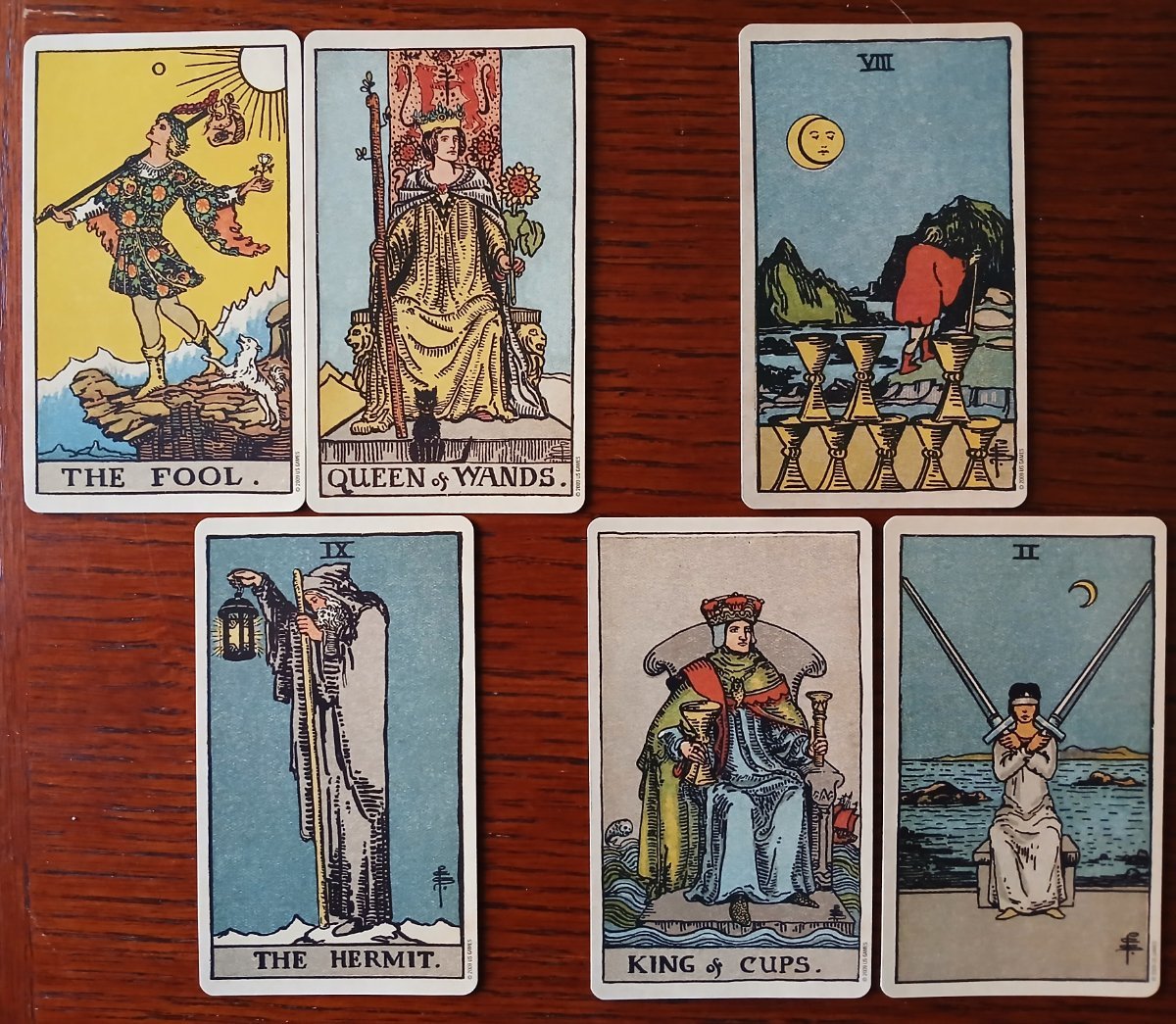
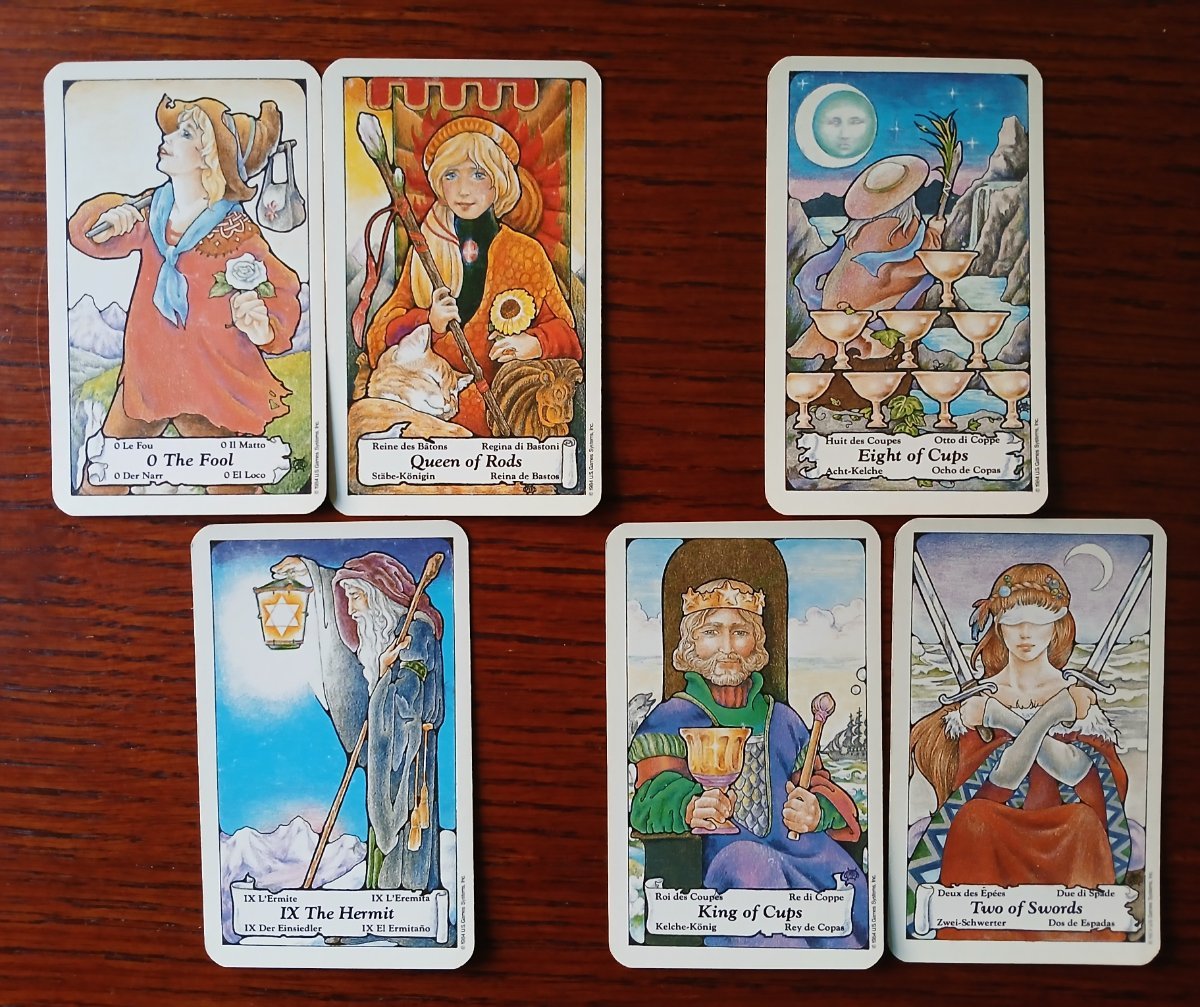
I've been thinning down my collection, and I'll never give away the Fey. It's a treasure! I’m going to continue with my Golden Dawn and RWS series, so this week will be Hanson-Roberts Tarot paired with Smith-Waite Tarot Centennial Edition Deck, part of the Pamela Colman Smith Commemorative Set from US Games 2009, which includes a copy of Waite’s The Pictorial Key to the Tarot and The Artwork & Times of Pamela Colman Smith, Artist of the Rider-Waite Tarot Deck by Stuart R. Kaplan and some art cards. It’s still in print, but it was more affordable back in 2009! (I also have the Smith-Waite Tarot Deck Centennial Edition in a Tin version, which I used as a deck of the week back in 2021 paired with Pixie’s Amazing Lenormand.) Hanson-Roberts was one of my first decks, which I picked as a “traditional” deck while I picked the Motherpeace as a nontraditional. (I was thinking in categories even back then!) I don’t think I’ve ever done a card-to-card comparison between Hanson-Roberts and RWS, so I think that’s how I’ll work it this week. I’ll shuffle and deal Hanson-Roberts and match it with the Smith-Waite. Interview! What is your most important characteristic? The Hermit It goes its own way but always in search of the truth. Or always with the goal of imparting the truth. What is your strength? Queen of Rods It’s comfortable but strong. Your weakness? The Fool It goes off on its own tangent sometimes. He’s looking up, not where he’s going, and the Hermit is looking down, and he’s not going anywhere. What can you teach me? Two of Swords The deck can teach me how to make good decisions by looking within. How can I learn it? King of Cups Contrapositive of the Queen of Rods: By not being comfortable but strong, but instead being strong and active but comfortable. What will be the outcome of our work together this week? Eight of Cups Maybe this is the before scene of the Hermit at the beginning of his quest for truth. I will feel all the feelings of connecting with my old deck, and then move on. Ok! Let’s give all that a try!
-

Deck of the Week Sign-up Thread, Week 46: Jun. 1 - Jun. 7
Bodhiseed replied to fire cat pickles's topic in Deck of the Week
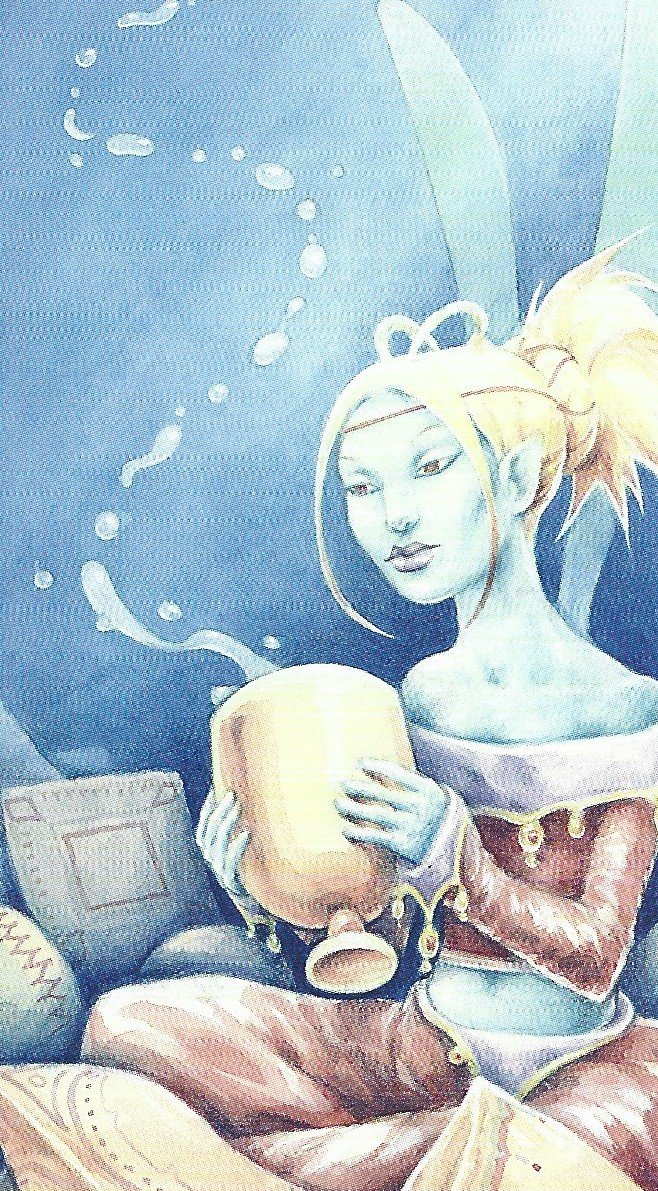
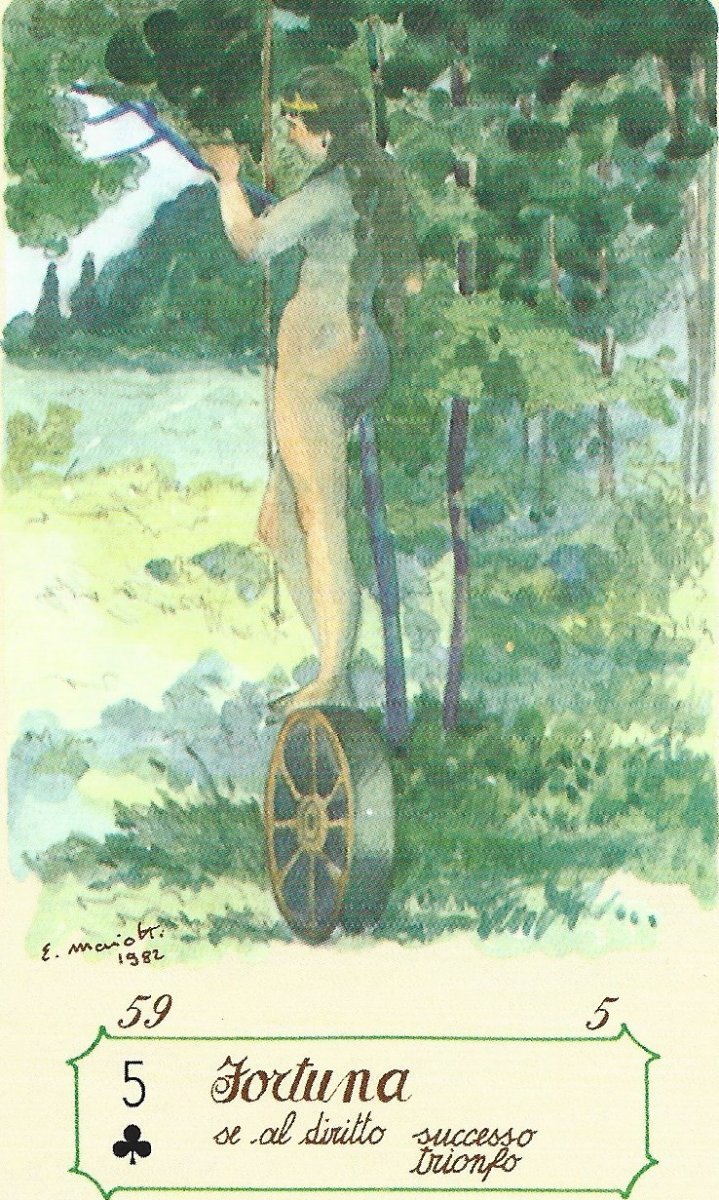
Thank you, Fire cat! I'm in with the Fey Tarot paired with the I Misteri Della Sibilla. Compassion manifests in us as the offering of kindness rather than withdrawal. —Sharon Salzberg The drops emerging upward from the Queen's cup are her version of texts, calls, and letters to see how people are doing. She is a listener, one who can empathize with kindness without self-identifying and drowning in the feelings of others. Compassion isn't trying to fix someone - which is often just a reaction to our being uncomfortable. While we may offer advice if asked for, it's more about bearing witness to someone's pain so they don't feel alone and disconnected. The Five of Clubs suggests good fortune that is created by our own actions. As St. Basil said, "They who sow courtesy reap friendship, and they who plant kindness gather love."
-
Deck of the Week Sign-up Thread, Week 464: May 25 - May 31
fire cat pickles replied to fire cat pickles's topic in Deck of the Week
-
Deck of the Week Sign-up Thread, Week 46: Jun. 1 - Jun. 7
fire cat pickles posted a topic in Deck of the Week
A unique version of Reading Circle for those who would like to work through their collection of decks, participants choose decks from their collections to work with for the week. Some use one deck, others use two or more. Some combine methods: Tarot, non-tarot (e.g. oracle), playing cards, or any other divinatory method is welcome. All we ask is that you use at least one tarot or oracle deck. No collection is too large or too small. The only rules we have are the Tarot, Tea & Me Rules; Be respectful of one other. Please join us! Please post with your choice of deck(s) for the week Chat away about your deck, how you're finding it (or not), etc., it's all up to you Participants may either choose to share their readings here in this discussion thread or opt to have their own journal in the Journals Forum and link it here Yet others may even have an offline journal in paper & pencil/pen form Share as often, as much, or as little as you like. You can drop in and out at any time—reality and life permitting. New to tarot? Long time reader? Come on in! Participants fire cat pickles: Tarot de la Rea Bodhiseed: Fey Tarot paired with the I Misteri Della Sibilla Rachelcat: Hanson-Roberts Tarot paired with Smith-Waite Tarot Centennial Edition Deck Mi-Shell: Oriens Animal Tarot Click here for DOTW 464 (5/25-5/31) -

5 of Wands ~ Making a Pentacle / Pentagram?
Morwenna replied to DanielJUK's topic in Individual Card Meanings
The 5 of Wands in the Robin Wood deck is pretty obvious as a pentacle that hasn't got its act together yet. -
Yes, this is what I thought too. My idea was not exactly a reading exchange, but more like an exercise, like doing Full Moon or New Moon readings and sharing, so we can explore diferences and similarities. Things like that. But I agree, it’s tricky to place something like that. And I’m not even sure anyone else would be interested 😅
- Last week
-
Part of my perspective comes from personal site visits to oracular temples in the Mediterranean region (42 so far). Since all are in various states of ruination, some quite severe, visiting ancient temples today will never match the experience of original societies, but still there is something to be said for direct contact with temple sites and the intuitive understanding that can emanate from those experiences. But that's just perspective development, not academic reference. If you're interested in more illuminating (sorry for the pun) scholary research on the play of light and shadow within temple interiors, I'd start you with the sources below. While these are good starting points, there are plenty of writings for anyone who wants to take a deeper dive, especially since the psychology of visualization has been a growing field of interest for archaeologists and the like. Criado-Boado, Martinez, Blanco, Alonso-Pablos, Verdonkschot: Archaeologiques of Sight (Journal of Anthropological Archaeology, 2024) Religion in Ancient Egypt (Edited by Byron E. Shafer; 1991) Sight and the Ancient Senses (Edited by Michael Squire; Routledge, 2016) Christopher Tilley: A Phenomenology of Landscape (Oxford University Press, 1994) Jasper Zwarts: Light, Darkness, and Revelation (Journal for the Study of the Old Testament, 2020)




-
Available Subscriptions
-
Current Donation Goals
-
Forum Hosting Fees (Resets 4/28/27)Raised $20.00 of $199.00 target
-
-
Deck to Check
-
 By Chariot,
-
-
Staff Online
-
-
Member Statistics
-
Total Members7,328
-
Most Online1,577
 Newest Member
StrixthePrettyOwl
Joined -
-
Who's Online (See full list)
- DanielJUK
-
Links Directory
-